
Thank you very much!

Most of us will never get on the Forbes list by making a killing in the stock market or by filling our coffers to overflowing from the strategic buying and flipping of foreclosed real estate, —no matter how many DVD’s we buy from the huckster on the infomercial. We will also not be  Halle or Lena or Angelina beautiful. We will not win the Nobel,
the Pulitzer or the Oscar—in any category—and most probably neither will anyone we know. Our closets are not stocked with  Armani, Prada, Louboutins or Birkin bags. The good jewelry we wear on
special occasions most likely came from Zales or Jared, not Harry Winston or Cartier.
A great dinner out at our favorite steak house consists of USDA prime, not Kobe, beef. And  we are now old enough and clever enough to know that whether or not you clean your plate has absolutely nothing to do with easing the misery of the millions of starving
  children in China or Ethiopia or wherever it was our parents filled us full of angst and guilt about when we didn’t want to eat our Brussels sprouts or liver or kumquats.
Our garages do not provide temperature and humidity controlled shelter for our Bentleys and Maseratis—they  are jam packed with lawnmowers, snow blowers and the other junk we can’t fit in the house and haven’t yet moved to the self-storage place. It’s a pretty safe bet that, although it is possible, very few of our children will become the President of Harvard or the
  United States, launch the next Microsoft, or discover a cure for the common cold. More likely than not, they will grow up, get fairly decent jobs or start a small accounting/house-painting/hairdressing/etc. business and generally get on with their lives, which in a world where every year, ten or so million children die before their fifth birthday, is pretty excellent.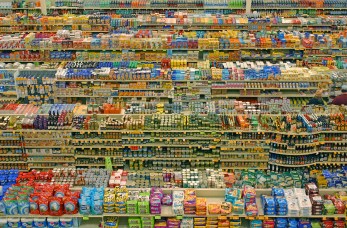
The shelves of our local supermarket are laden enough food to feed entire villages in Haiti or Cambodia or Somalia—for months, but we complain indignantly about long lines and the lack of enough check out registers and only begrudgingly accept a rain check for the sale item now out of stock.
Some of us can barely afford health insurance-even with the Affordable Care Act, some of us surely are affected by illness– our own or that of someone near and dear, some of us  have been misdiagnosed or even mistreated by a health care professional, but we cannot imagine, no matter how hard we try, what it is like to live in a place where there are NO doctors or hospitals.
We are up in arms when our power fails for a few hours after an overtaxing summer of overwhelming 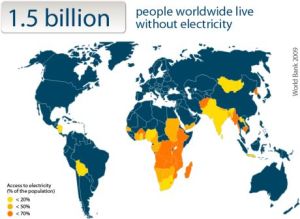 heat, (Caused in no small part by global warming from our being such terrible stewards of the planet we call home.) but the notion of living in a place where electricity is available (to rich and
poor alike) only five or six hours a day is inconceivable to us.
Once a year on a chilly November day, after The  Big Parade and before and during The Big Game, we give collective, unembarrassed obeisance and lip-service to our gratitude for our abundant blessings over a well roasted
 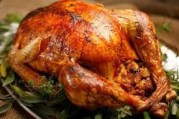 (often too well-roasted) fowl—because even the government, knowing how good we had it here, mandated a national Thank You Day (to which Supreme Being you give thanks has not yet been mandated). And yet before the wish bone is snapped and we’ve had a chance to get bored with the leftovers— hell, before the good dishes have been put back in


the china cabinet, we have joined the unruly mob of “black Friday” thugs coming to blows over the last $49 TV at the SuperCheapoMart Early Bird Sale. The ad said only 50 at each store. And you’re number 51. Oh well. Did you really needed another television set anyway?
Where did all that thankfulness we so humbly heralded the day before go?
We live in a time, AND in a country possessed of untold bounty. But the whine has become our hue and cry. We bitch and moan so much that I’m not sure we’re even remotely cognizant of how good we have it. As the First Lady so eloquently stated “…this, right now, is the greatest country on Earth.”
Here, there is much. And, truth be told, deep down, we know it.

Yet we are so busy complaining about what we’re lacking that we have no understanding that to most of the world, EVERYONE in America is rich. And relatively speaking, we are. Even the poorest and most disenfranchised among us are several centuries better off than the majority of the known world.
So—now that we have reached the age of true maturity—which brings with it wisdom, understanding and acceptance (or at least it’s supposed to if you’re doing it right) it is time 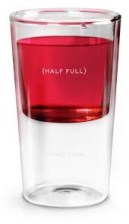 to realize that for more of us than would readily admit it, the glass has been half full (at least) most of our lives. And if your glass is among the underfilled, more than likely, it’s because you either spilled it—it’s kinda hard to keep everything in there when you’re running too fast and not paying attention or that you were once again not paying attention when they told you which line you should get in for your half glass worth.
A few years ago, I believe that Oprah, the undisputed people’s choice for guardian of our national conscience, inveigled us to keep a Gratitude Journal. I’m not really sure how I feel about the whole 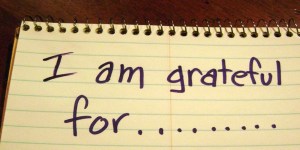 journaling thing—and there’s likely to be a later LESSON on that, but my personal “to journal or not to journal” indecision aside, the call to be mindful and grateful for what we have is one we all can and SHOULD heed—often and repeatedly, without the designation of a special day.
Homework:
Each and every day that you open your eyes, before you haul your butt out of bed. Think of just one thing you’re grateful for. I don’t care if you write it down or not, but you do have to call to mind at least one of your good fortunes every day—even on weekends. (On really really bad days, you have permission to repeat or to only be grateful.)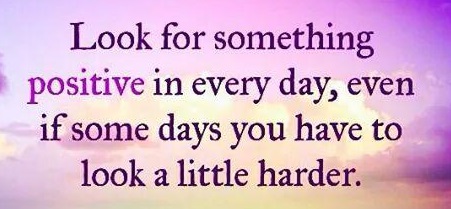
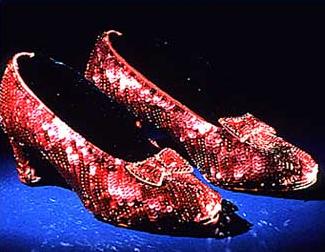
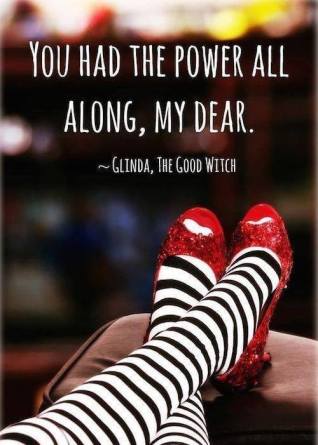
 When I saw this image posted on the Facebook page Fly, Hip & Ageless the other day, it reminded me of how many of us have lost our way “home;” the way back to the essence of who we are…or were. We’ve been whoever we needed to be, for whomever needed us to be whatever that is (daughter/wife/sister/boss/mother/employee/grandmother/etc.) for so long that we no longer remember who we used to be. Back before the world crept into our sense of self, our dreams and our belief in possibilities and re-shaped who we were…who we might have been.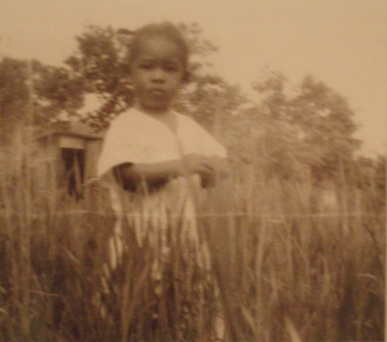
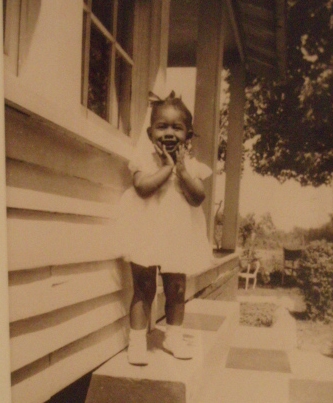
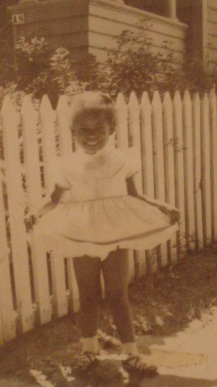
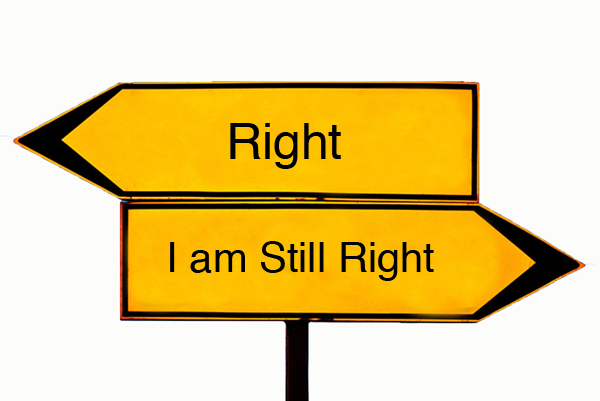
 By the time we are on the approach to midlife we have accumulated quite an extensive collection of rules—most of which we don’t even stop to question. Through repetition and indoctrination we have learned to take many these rules as gospel. Some of these edicts are legitimate, necessary and actually protect us from behavior that can be harmful to ourselves or to others. Following the Ten Commandments
  and Rule of Law, washing your hands after you use the bathroom (or ride the subway), understanding the rules of the road—including speed limits, “yield,” “pass on the left” and “right” of way are all decrees that keep us safe, healthy and enable us to live with each other in a relatively civilized society. All in all, this is a good thing.
 the logic behind them. Rules like the recently done away with, but hard to get out of our heads, “You can’t wear white after Labor Day.”
 And I won’t even go into the zealous dogma of wedding etiquette—who pays for what and who sits on which side of the church—what if you’re friends with the bride AND the groom?!
  inside.” This was to protect the woman’s voluminous dresses and petticoats from dust and muddy splashes sprayed up on the sidewalk from horse drawn carriages passing in the street. Now many urban pedestrians have experienced an unwanted and unpleasant shower from a speeding taxi or car while waiting for the light to change. But sidewalks are much wider than they used to be, we don’t have horses hooves tossing divots into our path and our dresses are, under most normal daily activities, hardly dragging along the sidewalk, but the “rule” still exists. I find myself, if I’m not on my guard, looking at a young couple strolling down the street and wondering “Doesn’t “he” know he’s
  “supposed” to walk on the outside?” Duh…
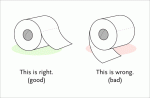 preference. The over/under toilet paper roll debate is a good example—the 160,000+ Google entries on the subject notwithstanding. There is no rule or right or wrong here, only what you like, and of course, habit.
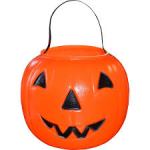 like when a Christmas Eve gift opener marries a Christmas morning opener, or the jack-o-
 lantern pumpkin carver decides to take up with the plastic pumpkin picker. Sorting out the “when and if” of breaking our long-held rules and flying in the face of sacred and inviolate family policies is a subjective undertaking and, I have concluded, best left to be negotiated (or duked out) by those who are involved. So you’ll get no advice (or judgment) from me about whether the dressing goes inside or outside the turkey—or for that matter, the semantics of calling it dressing or stuffing.
 families with steely will and determination— the rules about things we want done in a particular way. This includes everything from declarative statements that start with “We always…” or “I never…” to the way towels are folded, the place we keep our plastic bags and our hair-dos and don’ts. (Which will be addressed in a future Lesson – Hair Story). We don’t even see it happening, but slowly and surely our own rules lead us
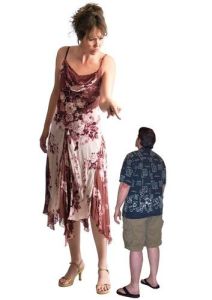 to trade “cute” – not as in “pretty and perky” but as in delightful, adorable (read loveable) and savvy, for being “right.” By then, we are well on our way to shrewdom—a frame of mind that is so totally non-cute.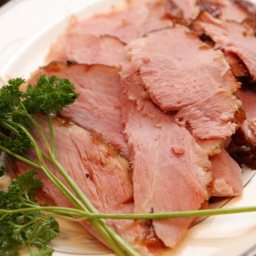
 ingredients for the sauce for basting the ham (clearly the secret to such a successful hunk of pig) and then the instructions, which said, “Cut the sides off the ham…” More than a little curious, Val asked Mary the reason for cutting the sides off the ham. Would this somehow allow the hulking haunch to absorb more of the fabulous basting nectar? Was that the secret? “I don’t know, this is the way my Mom made ham,” Mary said. My sister didn’t probe any deeper, and decided she would just use the removed sides to season some green beans or dice and add to a quiche.
 she’d end up wondering why no one else had discovered this seemingly simple step before. Mary continued. “Mom said when she started making the big holiday ham, she didn’t have a pan large enough so that’s how she made the ham fit. I guess I watched her do it, so that’s the way I’ve done it in my house ever since— even though my pan is plenty big.”
 neighbor—in their OWN house) chooses to do the thing differently (read incorrectly). Sometimes we are forced to hold our tongues like with our boss at work or with our neighbors, and we find ourselves secretly stewing in the bubbling juices of our rightness—a decidedly bitter brew. But lucky for us, in our own homes and families, we not only are free to let the wrongdoers know, in no uncertain terms, they have done the thing, whatever it is, incorrectly, we then set about to redo it—“the right way.” Feeling enormous justification and more than a small degree of self-righteousness, we next convince ourselves that it’s really just easier to do it ourselves in
  the first place, or we berate the other person for not “getting it.” “How many times do I have to tell you…?”
 folded around the fitted sheet and the pillow cases? Obviously, the answer is “No.” Try giving yourself a break from your own rules. Ease up on the need to be RIGHT. You just might like it—and realize that the world didn’t stop spinning on its axis.
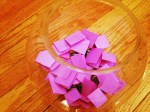 of yours, write down five of them on separate pieces of paper. Fold each piece so they are the same size (in quarters, then in half usually works well) and place in a bowl, basket, hat—any container of your choosing.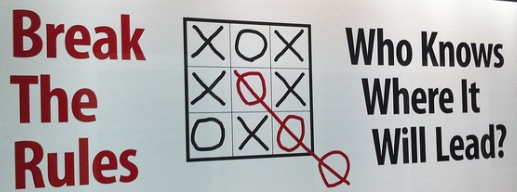


 Like the Harpies of mythology, she is fierce, bad-tempered and relentless. She’s the one who makes you wonder if you’re good enough. By now her nagging little voice has been whispering bits and pieces of self doubt into your psychic ear for decades, so long in fact, that at this juncture it seems like harmless white noise—you aren’t even aware of her presence any more. But she’s anything but harmless and she needs to go. Now.
 first words back when you were a little girl and she was just a little Harpy in Training (H.I.T.). You hadn’t begun to “develop” yet—as they used to say, much less develop any anti-Harpy skills. So she went to work on your young, defenseless, happy little self. “How
 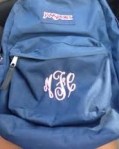 come you don’t have a Barbie book bag?” (Translation: The CUTE girls all have Barbie book bags while you have the practical blue one your mother insisted would last a couple of years.) “Why don’t you have streamers on your bike?” (Translation: But even if you get streamers what if
  they’re not the right color?)
 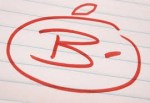 “Only a B in geography?” (Translation: Not quite as smart as Melissa huh?) “If you could jump higher you would have made the volleyball team.” (Translation: You’re too tall/short/fat/awkward— what ever gave you the idea you could be an athlete?)
 And so the plague begins. Its most telling symptom is unconscious comparison—almost always to other women. We compare ourselves to our friends, sisters, mothers, cousins, co-workers, neighbors, strangers, bosses, movie stars, and sadly even to our daughters. Sometimes we know we’re doing it, but mostly we’re unaware of how many times a day we think of ourselves in terms of how we measure up to someone else, or someone else’s expectations. Those expectations are, more often than not, a presumption on our part—
 because if we don’t think we’re good enough, how can anyone else possibly miss the bright flashing neon marquee on our forehead announcing our long list of shortcomings to all the world? Believe me, despite the fact that it blinds YOU nearly every time you look at yourself, THEY don’t see it until you point it out. Why? Because they’re far too busy worrying if you are scrutinizing their list of personal inadequacies.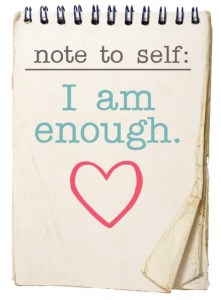
 Cute Still Counts