
Thank you very much!

Most of us will never get on the Forbes list by making a killing in the stock market or by filling our coffers to overflowing from the strategic buying and flipping of foreclosed real estate, —no matter how many DVD’s we buy from the huckster on the infomercial. We will also not be  Halle or Lena or Angelina beautiful. We will not win the Nobel,
the Pulitzer or the Oscar—in any category—and most probably neither will anyone we know. Our closets are not stocked with  Armani, Prada, Louboutins or Birkin bags. The good jewelry we wear on
special occasions most likely came from Zales or Jared, not Harry Winston or Cartier.
A great dinner out at our favorite steak house consists of USDA prime, not Kobe, beef. And  we are now old enough and clever enough to know that whether or not you clean your plate has absolutely nothing to do with easing the misery of the millions of starving
  children in China or Ethiopia or wherever it was our parents filled us full of angst and guilt about when we didn’t want to eat our Brussels sprouts or liver or kumquats.
Our garages do not provide temperature and humidity controlled shelter for our Bentleys and Maseratis—they  are jam packed with lawnmowers, snow blowers and the other junk we can’t fit in the house and haven’t yet moved to the self-storage place. It’s a pretty safe bet that, although it is possible, very few of our children will become the President of Harvard or the
  United States, launch the next Microsoft, or discover a cure for the common cold. More likely than not, they will grow up, get fairly decent jobs or start a small accounting/house-painting/hairdressing/etc. business and generally get on with their lives, which in a world where every year, ten or so million children die before their fifth birthday, is pretty excellent.
The shelves of our local supermarket are laden enough food to feed entire villages in Haiti or Cambodia or Somalia—for months, but we complain indignantly about long lines and the lack of enough check out registers and only begrudgingly accept a rain check for the sale item now out of stock.
Some of us can barely afford health insurance-even with the Affordable Care Act, some of us surely are affected by illness– our own or that of someone near and dear, some of us  have been misdiagnosed or even mistreated by a health care professional, but we cannot imagine, no matter how hard we try, what it is like to live in a place where there are NO doctors or hospitals.
We are up in arms when our power fails for a few hours after an overtaxing summer of overwhelming  heat, (Caused in no small part by global warming from our being such terrible stewards of the planet we call home.) but the notion of living in a place where electricity is available (to rich and
poor alike) only five or six hours a day is inconceivable to us.
Once a year on a chilly November day, after The  Big Parade and before and during The Big Game, we give collective, unembarrassed obeisance and lip-service to our gratitude for our abundant blessings over a well roasted
 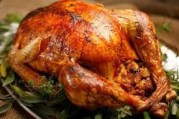 (often too well-roasted) fowl—because even the government, knowing how good we had it here, mandated a national Thank You Day (to which Supreme Being you give thanks has not yet been mandated). And yet before the wish bone is snapped and we’ve had a chance to get bored with the leftovers— hell, before the good dishes have been put back in


the china cabinet, we have joined the unruly mob of “black Friday” thugs coming to blows over the last $49 TV at the SuperCheapoMart Early Bird Sale. The ad said only 50 at each store. And you’re number 51. Oh well. Did you really needed another television set anyway?
Where did all that thankfulness we so humbly heralded the day before go?
We live in a time, AND in a country possessed of untold bounty. But the whine has become our hue and cry. We bitch and moan so much that I’m not sure we’re even remotely cognizant of how good we have it. As the First Lady so eloquently stated “…this, right now, is the greatest country on Earth.”
Here, there is much. And, truth be told, deep down, we know it.

Yet we are so busy complaining about what we’re lacking that we have no understanding that to most of the world, EVERYONE in America is rich. And relatively speaking, we are. Even the poorest and most disenfranchised among us are several centuries better off than the majority of the known world.
So—now that we have reached the age of true maturity—which brings with it wisdom, understanding and acceptance (or at least it’s supposed to if you’re doing it right) it is time 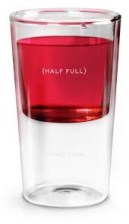 to realize that for more of us than would readily admit it, the glass has been half full (at least) most of our lives. And if your glass is among the underfilled, more than likely, it’s because you either spilled it—it’s kinda hard to keep everything in there when you’re running too fast and not paying attention or that you were once again not paying attention when they told you which line you should get in for your half glass worth.
A few years ago, I believe that Oprah, the undisputed people’s choice for guardian of our national conscience, inveigled us to keep a Gratitude Journal. I’m not really sure how I feel about the whole  journaling thing—and there’s likely to be a later LESSON on that, but my personal “to journal or not to journal” indecision aside, the call to be mindful and grateful for what we have is one we all can and SHOULD heed—often and repeatedly, without the designation of a special day.
Homework:
Each and every day that you open your eyes, before you haul your butt out of bed. Think of just one thing you’re grateful for. I don’t care if you write it down or not, but you do have to call to mind at least one of your good fortunes every day—even on weekends. (On really really bad days, you have permission to repeat or to only be grateful.)
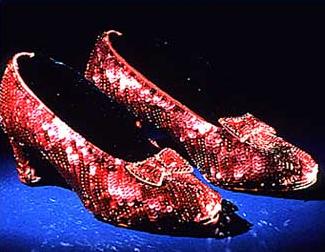
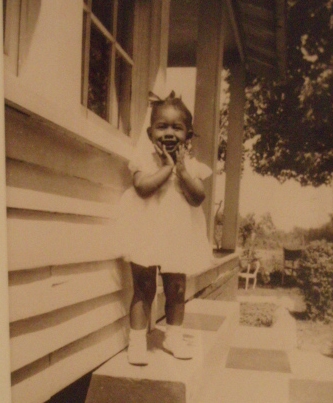
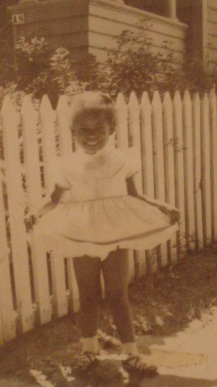
 When I saw this image posted on the Facebook page Fly, Hip & Ageless the other day, it reminded me of how many of us have lost our way “home;” the way back to the essence of who we are…or were. We’ve been whoever we needed to be, for whomever needed us to be whatever that is (daughter/wife/sister/boss/mother/employee/grandmother/etc.) for so long that we no longer remember who we used to be. Back before the world crept into our sense of self, our dreams and our belief in possibilities and re-shaped who we were…who we might have been.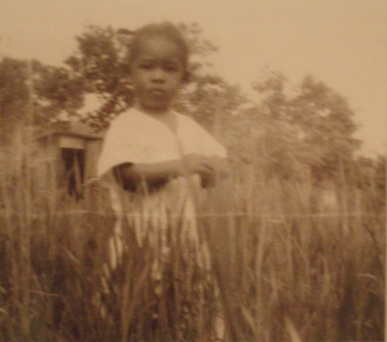


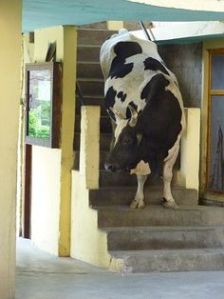 the house—and up the stairs to the second floor, just to see if they could do it. AND because they thought it would be fun. At least that’s how the story went every time Daddy told it, and believe me, he told it dozens of times. Many years later in a house of his own, and with no livestock of the bovine kind readily available, he enticed a semi-willing, fairly gullible squirrel into our back hall and up the stairs, for what must have been the exact same reasons. Why else would he do it? And to the delight of my brother, sister and I, that little fluffy tailed rodent stopped
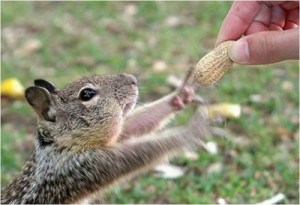 by often for a visit and a treat (peanuts in the shell). We named him Tony. And sometimes he brought a friend along. Tony (and his descendants) became a regular visitors to our home and when my mom sold the house after my dad passed, she adopted a new squirrel family at her new digs…because it was fun.
 contest with my nephew who was then seven or eight, to see who could stuff the most grapes in their mouth. My sister found them sitting on the sofa, cheeks bulging with grapes they weren’t allowed to chew—how else could you keep count and determine the winner?
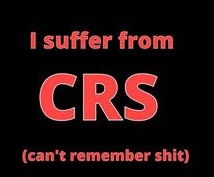 most of us, at this stage of life, have more than a touch of “CRS” (Can’t Remember Shit), and how much is a deliberate choice not to recall. This is choice results in a peculiar form of amnesia we can all be found guilty of. You watched your parents come down with it, promised yourself it would never happen to you, and yet, here you are—so far long life’s rocky climb to wherever it is you think you’re supposed to be going, that you can’t even remember that fun used to be important—hell, it was everything. In your full speed ahead quest to reach adulthood—and you really were in a hurry weren’t you? You deemed certain behavior childish and unsuitable. And since we have been taught that there is a time and a season for everything under the sun, in the name of being a grown up, one of the first things to be declared out of season and cast aside, is play.
 playing, but it’s a by-product and should be considered gravy. So while your workout at the gym may leave you invigorated (or exhausted) and the hour you spent in spinning class makes you feel strong and smug, these activities do NOT equal play. Yes, they are healthful, helpful and undoubtedly important, but they are not to be confused with playing.
 t
t hrough her hands, repeating the process over and over again. Or she may be running in circles until she’s dizzy with glee and vertigo. It doesn’t matter to her—as long as she gets joy from the experience—and she will.
 day life than women, and we give them grief for it. Whether it’s golf, poker, fishing or a pick-up game of hoops, we are more likely than not
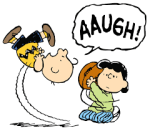
 rs of the XX Chromosome Club. And I will probably be hunted down like a traitor and forced to cut
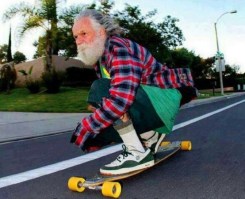 When it comes to honoring play- and the spirit of play, the boys win– hands down.
 kitchen floor game of jacks as they once did. But like with everything else about this getting older business, I’m smart enough to compensate–I don’t play jacks often, a pillow is helpful, I only play for a short time and I’ve even played standing at a table. The point is that I still enjoy jacks so why not play? Of course, there are
  other, more mature things I have fun doing as well— going dancing, cooking for friends and sex (Yep!), but I thought my love of jacks, precisely because it’s silly, would offer a better illustration.
 remember what it felt like to be on a swing. Flying and free. You had waited and waited until it was finally your turn. Your braids and the laces of your sneakers were both coming undone. You didn’t care. And when the swing slowed, didn’t you pump as hard as you could to keep aloft?



 was considered the spot that marked the downhill approach to the finish line. Expecting to make it to seventy-five wasn’t an unreasonable presumption if you took good care of yourself, but your best years were, without doubt, long gone—part of the past for you to remember fondly.
 Now, all it takes is a look at the exponential growth in the number of centennial birthday announcements made on the Today Show (by Willard Scott and continue after his recent retirement) to let us know that living to 100 and beyond is not as much of an anomaly as
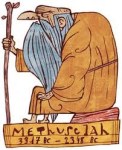 it was a scant ten or fifteen years ago. So– thanks to the miracles of modern medicine, as you hit the half century mark, for the first time in recorded human history, (not counting Methuselah and other Biblical ancients) at fifty, you may really, truly, be in middle age…how about that?
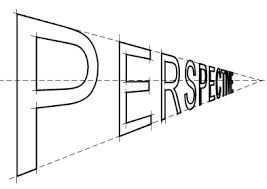 One of the greatest benefits of having made it through more than a few decades of living, is the gift of perspective. And lucky us, perspective is the kind of gift that keeps on giving. When we put down childish things and begin our journey toward adulthood we don’t know that perspective even exists. We live our lives in the present and the future and we have little, if any, ability (or need) to see the “Big Picture” through the lens of past experience.
 ignored the helpful warnings and sage advice and plunged ahead hell-bent on whatever goal we were pursuing. We ignored roadblocks or assumed they were meant for someone else…certainly not “me.” Blindly we stumbled along, bumping into the stuff along our pathway to wherever it was we were going. Sometimes we ran into the obstacles head first, fully expecting that the desire to get where we wanted to go, combined with the sheer force of thrust and our determination, would move the impediment out of our way. Sometimes we were right. More often than not, we were wrong. (Which, by the way, is how our novel Tryin’ to Sleep in the Bed You Made, which is about young people who think they have all the answers, came to be!)
 Fortunately, the injuries we receive from collisions with these roadblocks and deterrents are usually minor–not serious enough to cause any permanent disability. After all, when they take place, we are young, resilient, fearless and last but not least, clueless. We are, as were those who went before us, living, breathing object lessons for why phrases like “youth is wasted on the young” and “if I knew then what I know now” will never become obsolete. And when you when you hear these words uttered by a head-shaking, know-it-
 all solidly grown-ass man or woman in response to someone younger making a mistake, you can be pretty sure they have conveniently forgotten to remember their own rocky, pothole-filled path to their current place of wisdom and insight. Because while the gift perspective affords us a view of the whole picture, it can also make micro memories of the dumb stuff we all did.
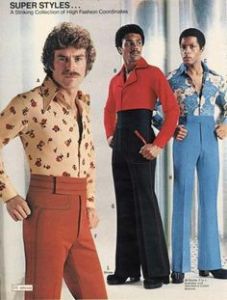 name! In the twenty plus years I’ve known him, he never has a conversation with me when he didn’t find a reason to reference the good old 70s. These were the years when, according to him, life was great-nearly perfect in fact. But in that chat he said, “I’ve been thinking. And you know how I hate to do that—much less admit that I’m wrong about anything. But…I’ve finally realized that the past wasn’t better.” He took a sip of scotch before he continued. “I was just younger. My life is much better now, way, way better than I wanted to remember it was back then.” He actually looked relieved once he said it out loud, like he was giving himself, permission, finally to let go and live now. His self-revelation did not lost long however and in short order he was back to complaining
 about the present and exalting the past.
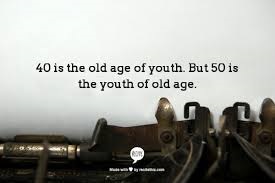
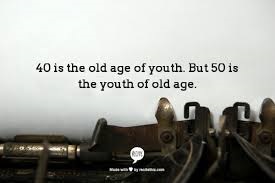 believe it or not, might just possibly be even greater than our youth. Victor Hugo said, “Forty is the old age of youth, fifty is the youth of old age.”
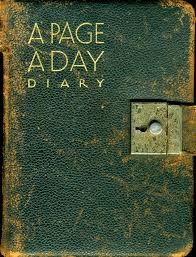
 a page or several in your diary. Because let’s face it, pre-Oprah and her “Gratitude Journals” most of us (and many still do) used our journals as a place to vent. We did not use them as a place for saying “Thanks Universe for the good things and for the lessons I’ve learned from the not-so-good things.” Our journals were a place to hold our very own “bitch until it feels better” fests so that we could face the next day relieved of a little bit of our frustration with parents, lovers, jobs, bosses, school, co-
 workers, friends who “didn’t get it” and the like.

 My mom, who passed away in 2013 at the age of 89, wasn’t a fancy society lady who lunched at swank restaurants with other fancy society ladies. Juanita made us pressed ham or tuna sandwiches on Wonder Bread for lunch-which we ate at our kitchen table. (In those days kids actually went HOME from school for lunch!)
  Sometimes, when were out of school and Mom was feeling a bit on the fancy side, she would make us “Eggs ala Goldenrod” for lunch–chopped hard boiled eggs served in a cream sauce over toast points, and my sister, and maybe even my brother, and I would eat in the dining room and feel a little fancy too. But Mom didn’t get facials or manicures or have other fancy beauty rituals.
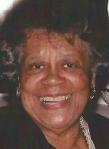 I mentioned earlier (LESSON 5 – Mirror Mirror) that when my mom was in her early 80’s some fairly debilitating health issues finally slowed her down. But even after months of being house or hospital bound—she rolled her hair every night (but was NEVER seen outside of the house in said rollers) and put on her good robe and lipstick every day because she never stopped being concerned about her appearance.


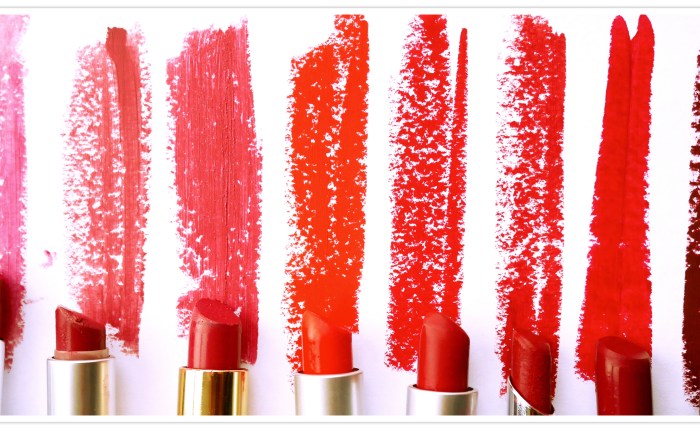
 watching Mom, somewhere between 4:30 and 5, before my dad got home from work, run a comb through her hair and refresh her lipstick. There was no lip liner or brush or gloss. Just a swipe from
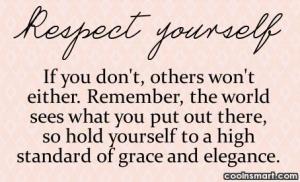 so easily subject to in those days (and perhaps still in these days.) I had not understood when I watched our neighborhood White pharmacist and White shoe repair man, call her “Mrs. DeBerry,” apologize if the prescription or heel replacement wasn’t ready, tell her thank you and to have a nice day- how different that was. I had not understood that my mom’s self-care and the personal dignity that behavior manifested, made people treat her with respect. I had not understood that she was teaching me, by example, (which we all know is the best way to teach anything) that it doesn’t have to be a big thing to make a big difference. It can be something as simple as combing your hair and putting on a little red lipstick.
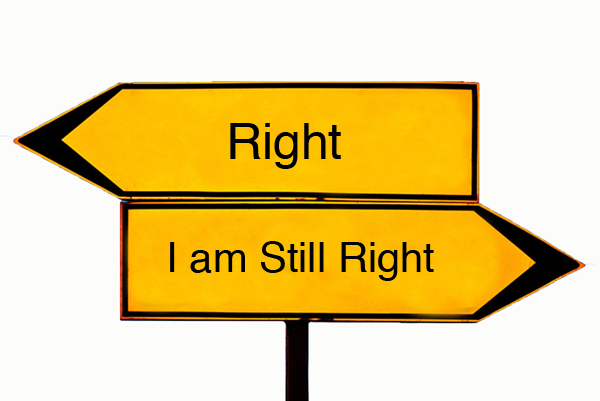
 By the time we are on the approach to midlife we have accumulated quite an extensive collection of rules—most of which we don’t even stop to question. Through repetition and indoctrination we have learned to take many these rules as gospel. Some of these edicts are legitimate, necessary and actually protect us from behavior that can be harmful to ourselves or to others. Following the Ten Commandments
  and Rule of Law, washing your hands after you use the bathroom (or ride the subway), understanding the rules of the road—including speed limits, “yield,” “pass on the left” and “right” of way are all decrees that keep us safe, healthy and enable us to live with each other in a relatively civilized society. All in all, this is a good thing.
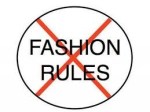 the logic behind them. Rules like the recently done away with, but hard to get out of our heads, “You can’t wear white after Labor Day.”
 And I won’t even go into the zealous dogma of wedding etiquette—who pays for what and who sits on which side of the church—what if you’re friends with the bride AND the groom?!
  inside.” This was to protect the woman’s voluminous dresses and petticoats from dust and muddy splashes sprayed up on the sidewalk from horse drawn carriages passing in the street. Now many urban pedestrians have experienced an unwanted and unpleasant shower from a speeding taxi or car while waiting for the light to change. But sidewalks are much wider than they used to be, we don’t have horses hooves tossing divots into our path and our dresses are, under most normal daily activities, hardly dragging along the sidewalk, but the “rule” still exists. I find myself, if I’m not on my guard, looking at a young couple strolling down the street and wondering “Doesn’t “he” know he’s
  “supposed” to walk on the outside?” Duh…
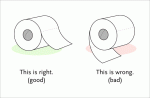 preference. The over/under toilet paper roll debate is a good example—the 160,000+ Google entries on the subject notwithstanding. There is no rule or right or wrong here, only what you like, and of course, habit.
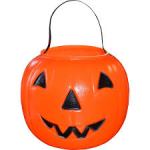 like when a Christmas Eve gift opener marries a Christmas morning opener, or the jack-o-
 lantern pumpkin carver decides to take up with the plastic pumpkin picker. Sorting out the “when and if” of breaking our long-held rules and flying in the face of sacred and inviolate family policies is a subjective undertaking and, I have concluded, best left to be negotiated (or duked out) by those who are involved. So you’ll get no advice (or judgment) from me about whether the dressing goes inside or outside the turkey—or for that matter, the semantics of calling it dressing or stuffing.
 families with steely will and determination— the rules about things we want done in a particular way. This includes everything from declarative statements that start with “We always…” or “I never…” to the way towels are folded, the place we keep our plastic bags and our hair-dos and don’ts. (Which will be addressed in a future Lesson – Hair Story). We don’t even see it happening, but slowly and surely our own rules lead us
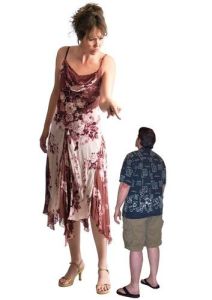 to trade “cute” – not as in “pretty and perky” but as in delightful, adorable (read loveable) and savvy, for being “right.” By then, we are well on our way to shrewdom—a frame of mind that is so totally non-cute.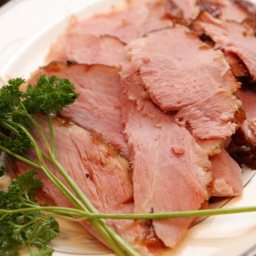
 ingredients for the sauce for basting the ham (clearly the secret to such a successful hunk of pig) and then the instructions, which said, “Cut the sides off the ham…” More than a little curious, Val asked Mary the reason for cutting the sides off the ham. Would this somehow allow the hulking haunch to absorb more of the fabulous basting nectar? Was that the secret? “I don’t know, this is the way my Mom made ham,” Mary said. My sister didn’t probe any deeper, and decided she would just use the removed sides to season some green beans or dice and add to a quiche.
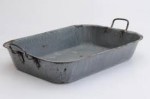 she’d end up wondering why no one else had discovered this seemingly simple step before. Mary continued. “Mom said when she started making the big holiday ham, she didn’t have a pan large enough so that’s how she made the ham fit. I guess I watched her do it, so that’s the way I’ve done it in my house ever since— even though my pan is plenty big.”
 neighbor—in their OWN house) chooses to do the thing differently (read incorrectly). Sometimes we are forced to hold our tongues like with our boss at work or with our neighbors, and we find ourselves secretly stewing in the bubbling juices of our rightness—a decidedly bitter brew. But lucky for us, in our own homes and families, we not only are free to let the wrongdoers know, in no uncertain terms, they have done the thing, whatever it is, incorrectly, we then set about to redo it—“the right way.” Feeling enormous justification and more than a small degree of self-righteousness, we next convince ourselves that it’s really just easier to do it ourselves in
  the first place, or we berate the other person for not “getting it.” “How many times do I have to tell you…?”
 folded around the fitted sheet and the pillow cases? Obviously, the answer is “No.” Try giving yourself a break from your own rules. Ease up on the need to be RIGHT. You just might like it—and realize that the world didn’t stop spinning on its axis.
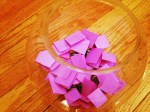 of yours, write down five of them on separate pieces of paper. Fold each piece so they are the same size (in quarters, then in half usually works well) and place in a bowl, basket, hat—any container of your choosing.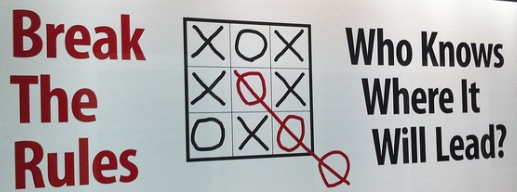
 Cute Still Counts